When production equipment starts making an unusual noise, producing inconsistent results, or slowing down the entire line, you need more than a quick repair. You need an experienced technician who understands how the equipment operates within your larger production process.
An on-site industrial equipment service visit is designed to identify the source of the problem, recommend practical solutions, and help your team get the equipment back into reliable operation. Whether your facility operates wood polishing equipment, stainless steel polishing machines, fiberglass sheet flatteners, or equipment located along a sanding line, knowing what to expect can make the service process faster and more effective.
At Platinum OEM Solutions, we provide hands-on industrial equipment support for manufacturers in Florida and throughout North America. Here is what typically happens before, during, and after an on-site service visit.
Before the Industrial Equipment Service Visit
A successful service visit often begins before the technician arrives at your facility.
During the initial conversation, the service provider will usually ask questions about the equipment, the problem, and the impact on production. The goal is to gather enough information to prepare for the visit and avoid unnecessary delays once the technician is on-site.
You may be asked to provide:
- The equipment manufacturer and model
- The machine serial number
- A description of the problem
- Photos or videos of the equipment
- Error codes or alarm messages
- Maintenance and repair history
- Information about recent equipment changes
- Details about the product being processed
- The urgency of the service request
- Your facility location and access requirements
For example, a wood polishing machine that is leaving inconsistent finishes may have a mechanical adjustment issue, a worn component, an electrical problem, or a process-related cause. Sharing photos, operating conditions, and maintenance history helps the technician arrive better prepared.
If replacement parts may be required, advance information can also help determine whether commonly needed parts should be brought to the facility or ordered before the visit.
Preparing Your Facility for On-Site Service
Before the technician arrives, your team should make the equipment as accessible as possible.
This may include clearing materials away from the machine, identifying the appropriate electrical disconnects, and making sure the technician can safely inspect all sides of the equipment. Your company should also have an employee available who understands the machine and can explain what has been happening.
The most helpful on-site contact is usually someone who:
- Regularly operates or maintains the equipment
- Has seen the problem occur
- Understands the normal production process
- Can explain any recent changes
- Has authority to approve testing or repairs
Facilities should also communicate any site-specific safety requirements before the visit. These may include personal protective equipment, lockout and tagout procedures, visitor orientation, restricted work areas, or special documentation.
Good preparation allows the industrial equipment service technician to spend more time diagnosing the machine and less time waiting for access or information.
The Initial Equipment and Safety Review
When the technician arrives, the visit will typically begin with a discussion about the reported problem and a review of the equipment.
Before opening panels, removing guards, or beginning testing, the technician should become familiar with the facility’s safety procedures and confirm how the equipment can be safely shut down and isolated.
The initial review may include:
- Confirming the machine make and model
- Reviewing the reported symptoms
- Speaking with operators and maintenance staff
- Examining the surrounding production area
- Reviewing safety procedures
- Inspecting the condition of guards and access panels
- Identifying electrical, pneumatic, hydraulic, or mechanical systems
- Reviewing any previous repair attempts
This conversation is important because the symptoms reported by an operator may provide valuable clues. A vibration that appears only at a certain speed, for example, may point to a different problem than a vibration that occurs continuously.
Observing the Equipment in Operation
Whenever it is safe and practical, the technician may ask to observe the equipment while it is running.
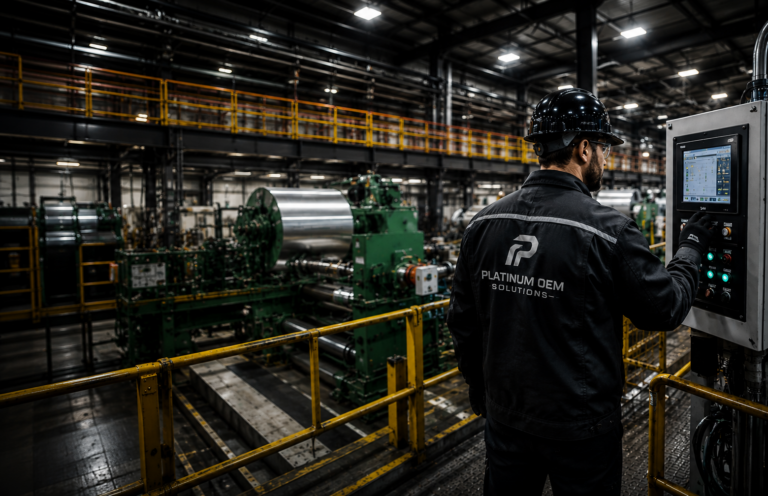
Seeing the machine under normal production conditions can reveal issues that are difficult to identify while the equipment is stopped. The technician may watch how materials enter and exit the machine, listen for unusual sounds, monitor movement, and examine the finished product.
For equipment located on a sander line, this could involve evaluating:
- Material tracking
- Belt movement
- Pressure consistency
- Feed speed
- Conveyor alignment
- Surface quality
- Dust collection performance
- Vibration or unusual noise
- Communication between connected machines
For stainless steel polishing or wood polishing equipment, the technician may also inspect polishing heads, abrasive contact, pressure settings, material feed, and the consistency of the final finish.
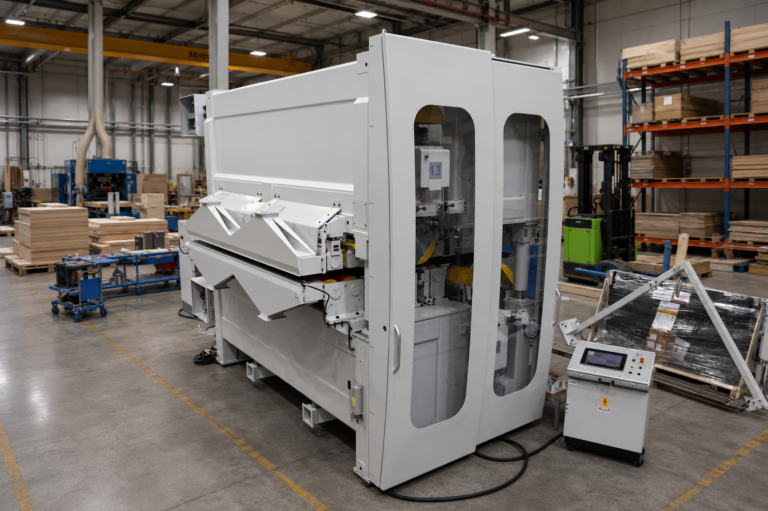
Fiberglass sheet flatteners may require inspection of rollers, alignment, pressure settings, drive systems, bearings, and sheet movement through the equipment.
The goal is not simply to identify what component has failed. A thorough industrial equipment service visit should also determine why the problem occurred and whether another part of the process contributed to it.
Diagnosing the Root Cause
Industrial equipment problems are not always caused by one obvious failed component.
A machine may be producing poor results because of incorrect settings, worn mechanical parts, damaged sensors, loose electrical connections, improper alignment, insufficient maintenance, or changes in the product being processed.
During diagnosis, the technician may inspect and test:
- Bearings and drive components
- Motors and gearboxes
- Belts, chains, and couplings
- Rollers and polishing heads
- Sensors and switches
- Electrical connections
- Control panels
- Pneumatic systems
- Hydraulic systems
- Safety circuits
- Machine alignment
- Lubrication points
- Wear components
- Operating parameters
The technician may also review how the equipment interacts with upstream and downstream machines. A problem that appears to originate in one machine may actually be caused by inconsistent material feeding, line speed differences, or improper communication between pieces of equipment.
This system-wide approach is especially important for integrated production lines.
Explaining the Findings
Once the inspection and diagnosis are complete, the technician should explain what was found in clear, practical terms.
You should expect to receive information about:
- The likely cause of the problem
- The condition of the equipment
- Any immediate safety or reliability concerns
- Recommended repairs or adjustments
- Parts that may be required
- Additional maintenance needs
- Risks associated with continuing to operate the machine
- Steps that can reduce the chance of the problem returning
In some cases, the technician may be able to complete the repair during the same visit. In other cases, replacement parts, additional labor, or a scheduled return visit may be necessary.
A professional service provider should distinguish between repairs that are required immediately and recommendations that can be planned for a future maintenance period.
Completing Repairs and Adjustments
If the necessary tools and parts are available, repairs may be completed during the initial visit.
The work could involve:
- Replacing worn or failed components
- Correcting machine alignment
- Adjusting pressure or speed settings
- Repairing electrical connections
- Replacing sensors or switches
- Tensioning belts or chains
- Correcting tracking issues
- Lubricating appropriate components
- Updating operating parameters
- Resolving communication issues between machines
For specialized equipment, the technician may also consult technical drawings, electrical schematics, equipment manuals, or manufacturer documentation.
The exact work depends on the equipment and the nature of the problem. A wood polishing machine may require different troubleshooting methods than a fiberglass sheet flattener or a stainless steel finishing system.
Testing the Equipment After Service
After repairs or adjustments are completed, the equipment should be tested before the service visit is considered finished.
Testing may begin with the machine operating without production material. Once the equipment appears to be running correctly, additional testing may be completed under normal production conditions.
The technician may verify:
- Proper machine movement
- Correct operating speeds
- Stable electrical performance
- Accurate sensor operation
- Proper material tracking
- Consistent pressure
- Acceptable surface finish
- Reduced noise or vibration
- Safe operation
- Communication with connected equipment
Your operators or maintenance team should be involved in this process whenever possible. They know what normal operation looks and sounds like, and they can help confirm whether the original problem has been resolved.
Operator and Maintenance Recommendations
An on-site industrial equipment service visit is also an opportunity for your team to learn more about the equipment.
The technician may identify operating practices or maintenance tasks that can improve reliability. These recommendations may include:
- Daily or weekly inspection points
- Proper lubrication intervals
- Components that should be monitored
- Correct cleaning procedures
- Recommended operating settings
- Signs of developing wear
- Spare parts that should be kept on-site
- Procedures for responding to recurring alarms
- Areas where additional employee training may help
Small changes in daily operation and preventive maintenance can often prevent larger repairs and extended production downtime.
What Happens After the Service Visit?
After the visit, you should receive documentation describing the work performed.
Depending on the scope of the service, the report may include:
- The original service concern
- Inspection findings
- Repairs and adjustments completed
- Parts used
- Equipment testing results
- Photos
- Recommended follow-up work
- Suggested preventive maintenance
- Parts that should be ordered
- Additional safety or reliability concerns
Keep this documentation with the equipment’s maintenance history. Detailed records make future troubleshooting easier and can help identify recurring problems.
If additional work is needed, the service provider should explain the next steps, expected parts requirements, and whether another on-site visit will be necessary.
Choosing an Industrial Equipment Service Provider
Industrial production equipment can be complex, especially when machines are customized, integrated into a larger production line, or no longer supported by the original manufacturer.
When choosing an industrial equipment service provider, look for someone who has experience with industrial machinery and understands the importance of production schedules, safety, communication, and practical problem-solving.
A qualified service technician should be able to:
- Troubleshoot mechanical and electrical problems
- Understand integrated production lines
- Communicate clearly with operators and managers
- Work safely within an active industrial facility
- Explain findings without unnecessary technical language
- Recommend practical repair and maintenance options
- Support both planned maintenance and urgent service needs
Experience across multiple types of manufacturing equipment can be especially valuable when a problem involves more than one machine or process.
Industrial Equipment Service in Florida
Platinum OEM Solutions provides industrial equipment service in Florida for manufacturers that need experienced, hands-on equipment support.
Florida manufacturers work across a wide range of industries, and every facility has different production requirements. On-site support allows the technician to see the equipment in its actual operating environment, speak directly with the people using it, and evaluate how it functions within the overall production line.
Whether you need troubleshooting, equipment adjustments, preventive maintenance, commissioning support, or help resolving a recurring production problem, an on-site visit can provide a clearer path forward.
Industrial Equipment Service in Orlando
Companies searching for industrial equipment service in Orlando may need support for both planned projects and unexpected equipment problems.
Platinum OEM Solutions can assist manufacturing facilities in the Orlando area with equipment troubleshooting, repairs, inspections, maintenance support, and production line evaluations.
Service may be available for equipment such as:
- Wood polishing machines
- Stainless steel polishing equipment
- Fiberglass sheet flatteners
- Industrial sanding equipment
- Conveyor systems
- Rollers and feed systems
- Finishing equipment
- Equipment located throughout a sander line
- Specialized or custom industrial machinery
On-site service helps ensure recommendations are based on the actual equipment, product, operators, and production conditions.
Industrial Equipment Service in North America
Platinum OEM Solutions also provides industrial equipment service in North America for manufacturers that need specialized technical support.
Travel-based service may be available for facilities throughout the United States, Canada, and other parts of North America, depending on the equipment, project scope, and scheduling requirements.
This can be especially helpful for companies that:
- Have limited access to qualified local technicians
- Operate specialized or European-manufactured equipment
- Need support across multiple locations
- Require equipment commissioning or relocation assistance
- Are experiencing repeated problems that have not been resolved
- Need an experienced technician to work with internal maintenance teams
Industrial equipment problems rarely improve on their own. Addressing unusual sounds, inconsistent production results, tracking problems, vibration, or recurring shutdowns early can reduce the risk of a more expensive failure.
Schedule an On-Site Industrial Equipment Service Visit
An on-site service visit should give your team more than a temporary fix. It should provide a clearer understanding of the problem, practical repair options, and recommendations that help improve equipment reliability.
Platinum OEM Solutions supports manufacturers with troubleshooting, repairs, preventive maintenance, machine commissioning, and specialized industrial equipment service throughout Florida and North America.
If your wood polishing equipment, stainless steel polishing equipment, fiberglass sheet flattener, sanding equipment, or production line machinery is not operating as expected, contact Platinum OEM Solutions to discuss an on-site service visit.